Where Are the Sutures Placed in a Face and Neck Lift?
A face and neck lift, also known as a facelift with neck lift, is a cosmetic procedure designed to reduce visible signs of aging in the lower face and neck. The surgery helps improve sagging skin, redefine the jawline, and tighten loose tissues that develop over time due to aging, gravity, and loss of collagen.
Many patients considering this procedure ask the same question: where are the sutures placed and will the scars be visible?
The good news is that modern facelift techniques are designed to hide incisions and sutures in natural areas of the face and hairline, making scars very discreet once the healing process is complete.
In this article, we explain where sutures are typically placed during a face and neck lift, why surgeons choose these locations, and how these techniques help create natural-looking results.
Common Incision and Suture Locations in a Face and Neck Lift
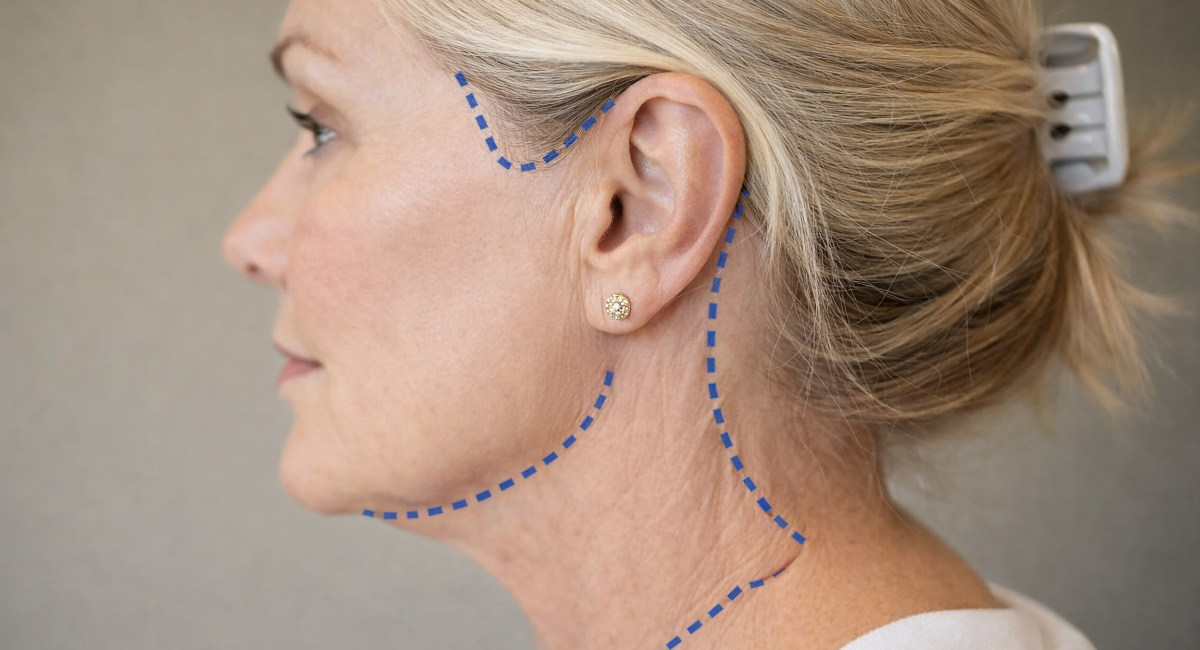
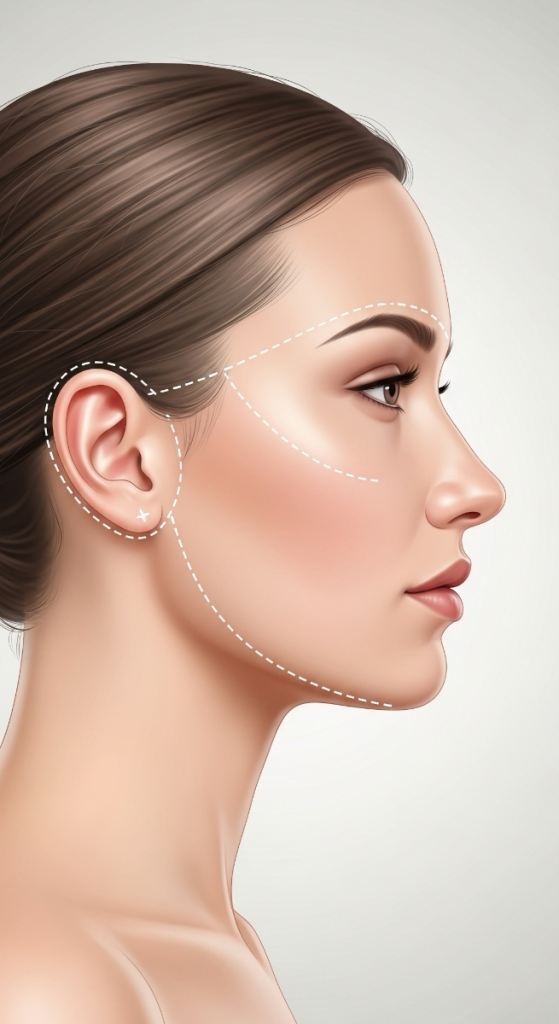
During a facelift procedure, surgeons place sutures along carefully planned incisions that follow the natural contours of the face, ears, and hairline. These areas allow the surgeon to reposition deeper tissues and remove excess skin while keeping scars as hidden as possible. Below are the most common areas where sutures are placed.
Around the Ears
One of the most common locations for facelift sutures is around the ears.
The incision typically begins:
- In the hairline near the temples
- Continues down in front of the ear
- Curves around the earlobe
- Then extends behind the ear
This placement follows the natural shape of the ear, which helps camouflage the incision once it heals.
By working through these areas, the surgeon can lift and tighten the skin of the cheeks and jawline, improving sagging skin and reducing the appearance of jowls.
Because the incision blends with the natural curves of the ear, most scars become very difficult to notice over time.
Behind the Ear and Into the Hairline
Another important area for sutures is behind the ear and slightly into the scalp hairline.
This location allows the surgeon to remove excess skin and tighten tissues in the lower face and upper neck without leaving visible scars.
Hair naturally covers this area, which helps hide the incision while it heals. This technique also allows the surgeon to reposition the skin in a way that looks smooth and natural rather than tight or artificial.
Under the Chin (When a Neck Lift Is Included)
If the patient is also having a neck lift, the surgeon may make a small additional incision under the chin, in an area called the submental region.
This small incision allows the surgeon to:
- Tighten the neck muscles (platysma)
- Remove or reposition excess fat
- Improve the definition of the neck and jawline
Sutures placed here are usually very small and hidden in the natural crease beneath the chin.
This step is often essential for achieving a well-defined neck contour and a smoother transition between the face and neck.
Why Surgeons Place Sutures in These Areas
Facelift incisions are not placed randomly. Surgeons carefully choose these locations to create the best cosmetic results while minimizing visible scars.
1. To Hide Scars in Natural Lines
The face has natural folds, creases, and hairlines that help hide surgical incisions.
By placing sutures in these areas, surgeons make sure scars blend into the surrounding skin and become less visible over time.
This is one of the reasons why modern facelift procedures can produce very subtle and natural results.
2. To Support Deeper Facial Structures
A facelift does not only tighten the skin. Modern techniques also focus on lifting deeper layers of the face, especially a structure called the SMAS (Superficial Musculoaponeurotic System).
Sutures are used to reposition and support these deeper tissues so that the result lasts longer and looks more natural.
This deeper support prevents the face from looking overly tight and instead creates a refreshed and youthful appearance.
3. To Maintain Long-Lasting Results
Proper suture placement helps maintain the new facial contours while the tissues heal.
Because the deeper structures are repositioned and secured with sutures, the results of a facelift can often last many years, depending on factors such as skin quality, lifestyle, and aging.
What Happens to the Sutures After Surgery?
After surgery, sutures usually remain in place for about 5 to 10 days, depending on the surgeon’s technique.
In some cases, surgeons may use dissolvable sutures, which disappear naturally as the skin heals.
During the recovery period, patients may experience:
- Mild swelling
- Bruising
- Temporary tightness around the incision areas
These effects are normal and gradually improve during the healing process.
Following your surgeon’s post-operative care instructions is essential to ensure proper healing and the best possible scar appearance.
Will Facelift Scars Be Visible?
For most patients, facelift scars become very discreet once healing is complete.
Several factors help minimize the visibility of scars:
- Strategic incision placement
- Advanced surgical techniques
- Proper wound care
- Natural fading of scars over time
Because most incisions are hidden around the ears, within the hairline, or under the chin, they tend to blend naturally with the surrounding skin.
Ready to Start or Have a Question?
Final Thoughts
A face and neck lift is carefully designed to rejuvenate the face while keeping scars as hidden as possible.
In most procedures, sutures are placed:
- Along the hairline near the temples
- Around the ears
- Behind the ear into the scalp
- Sometimes under the chin when a neck lift is included
These locations allow surgeons to lift and secure facial tissues while hiding scars in natural folds and hairlines.
In simple terms, sutures are placed where they can provide the best lifting support while remaining discreet. This allows patients to achieve smoother, more youthful facial contours without obvious signs of surgery.